

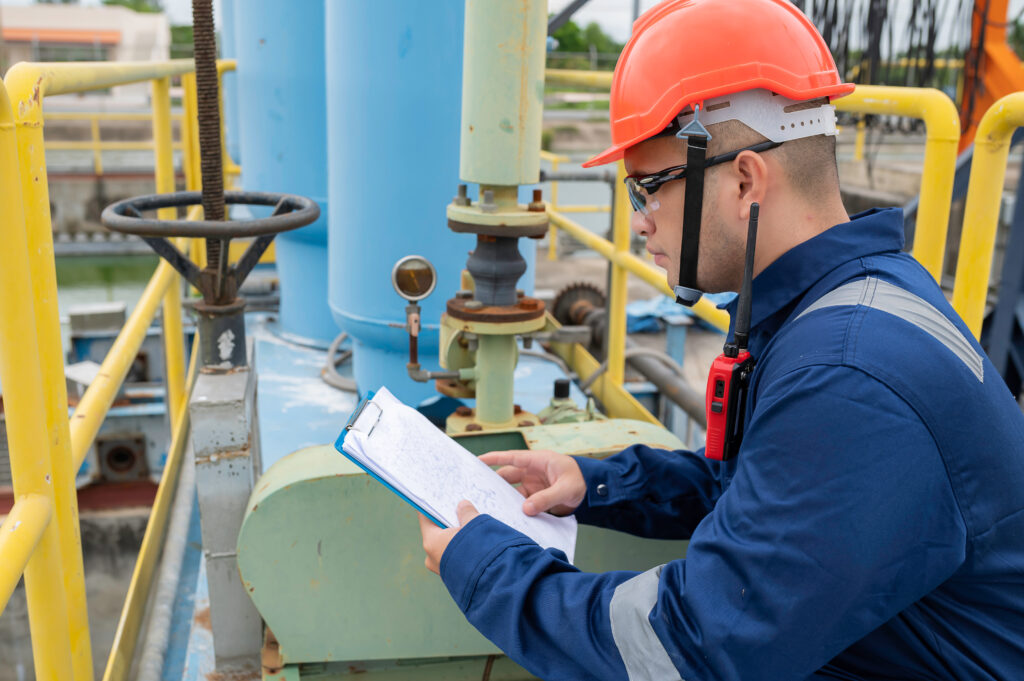
What Does a Water Treatment Engineer Do?
Water Treatment Engineers play an essential role in maintaining the performance, efficiency, and safety of commercial and industrial water systems. Their work extends beyond routine maintenance and involves monitoring water quality, protecting equipment from corrosion and scale, and ensuring systems operate in line with current legislation and industry guidance.
Although the role is often confused with that of a Water Hygiene Engineer, there are important differences. Water Hygiene Engineers focus on monitoring domestic water systems and controlling the risk of Legionella through inspections, cleaning and compliance. Water Treatment Engineers are responsible for the chemical and mechanical performance of a much wider range of systems, including cooling towers, boiler water systems, closed heating and chilled water systems, reverse osmosis (RO) plants and water softeners.
As buildings become more energy efficient and water systems become increasingly complex, the demand for experienced Water Treatment Engineers continues to grow across the UK.
What Does a Water Treatment Engineer Do?
A Water Treatment Engineer installs, services and maintains equipment that improves water quality and protects mechanical systems.
Their work helps prevent corrosion, scale formation and microbiological contamination while improving system efficiency and extending the life of expensive plant and equipment.
Depending on the employer, the role may include routine servicing, water analysis, chemical dosing, commissioning new equipment and responding to system faults.
Water Treatment Engineers work closely with facilities managers, estates departments, maintenance teams and compliance managers to ensure water systems continue to perform as designed.
Closed System Analysis
One of the most important responsibilities of a Water Treatment Engineer is analysing closed heating and cooling systems.
Closed systems continuously circulate water through boilers, chillers, pumps and pipework. Although the water remains within a sealed circuit, the system still requires regular monitoring to prevent corrosion, fouling and scale.
Routine sampling may include testing for:
- pH
- Conductivity
- Corrosion inhibitor levels
- Iron
- Copper
- Suspended solids
The results help engineers determine whether the existing treatment programme is working effectively or whether chemical adjustments are required.
Without regular analysis, system efficiency can decline and expensive equipment may suffer long-term damage.e equipment may suffer long-term damage.
Chemical Dosing
Chemical dosing forms the foundation of most water treatment programmes.
Different chemicals are introduced into water systems to control corrosion, prevent scale and maintain water quality.
Treatment programmes commonly include corrosion inhibitors, antiscalants, biocides and pH adjusters.
The correct dosage depends on system volume, water quality and operating conditions. Engineers regularly test water samples to ensure chemical concentrations remain within the required limits.
Accurate dosing protects pipework, pumps, valves and heat exchangers while reducing maintenance costs.
Cooling Tower Maintenance
Cooling towers require specialist knowledge because they operate in conditions that can encourage bacterial growth if they are not maintained correctly.
Routine maintenance often includes cleaning, chlorination, descaling, water sampling and chemical monitoring.
Engineers may also inspect side stream filtration systems and pre-filtration equipment to ensure suspended solids are removed before they affect water quality.
Regular maintenance improves system performance while supporting compliance with ACOP L8 and HSG274 Part 1.
Boiler Water Systems
Boiler water treatment helps maintain steam generation and heating efficiency.
Untreated boiler systems can quickly develop scale and corrosion, reducing heat transfer and increasing fuel consumption.
Water Treatment Engineers monitor water quality, adjust chemical dosing and investigate changes in system performance before they result in costly repairs.
The size of the boiler often determines the complexity of the treatment programme, although every system requires routine monitoring.
Water Softeners
Many commercial buildings rely on water softeners to remove calcium and magnesium from the incoming mains supply.
Reducing water hardness limits scale formation inside boilers, calorifiers and hot water systems.
Water Treatment Engineers install, service and repair water softeners while checking resin performance, regeneration cycles and salt levels.
Regular servicing helps maintain efficient operation and extends equipment life.
Reverse Osmosis Systems
Reverse osmosis systems produce high-quality purified water by removing dissolved minerals and contaminants.
RO systems are commonly found in pharmaceutical manufacturing, laboratories, healthcare environments and food production.
Water Treatment Engineers carry out routine servicing, membrane inspections, filter replacements and performance testing to maintain water quality.
Water Sampling and Testing
Water sampling provides valuable information about the condition of a system.
Engineers collect samples from different parts of the system before analysing water quality or sending samples to an accredited laboratory.
Testing may include microbiological analysis, pH measurement, conductivity, hardness, inhibitor levels and Total Viable Count (TVC).
The results help identify developing problems before they affect plant performance or compliance.
Where Do Water Treatment Engineers Work?
Water Treatment Engineers work across a wide range of industries where reliable water systems are essential.
Typical sectors include:
- Manufacturing
- Food and beverage production
- Pharmaceutical facilities
- Hospitals
- Hotels
- Universities
- Commercial offices
- Data centres
- Local authorities
- Facilities management companies
Each sector presents different technical challenges, although the objective remains the same. Water systems must operate efficiently while protecting valuable plant and equipment.
Qualifications and Skills
Many employers look for candidates with practical engineering experience and a good understanding of commercial water systems.
Useful qualifications include City & Guilds Plumbing, water treatment training, ACOP L8 awareness and Legionella-related certifications.
Engineers also need strong fault-finding skills, an understanding of chemical treatment programmes and the ability to produce clear service reports.
Experience with cooling towers, closed systems, chemical dosing equipment and water softeners is often highly valued.
Salary Expectations
Water Treatment Engineers are in strong demand throughout the UK.
Typical salaries include:
- Junior Water Treatment Engineer: £25,000 to £30,000
- Intermediate Water Treatment Engineer: £30,000 to £40,000
- Senior Water Treatment Engineer: £40,000 to £60,000+
Salaries vary according to experience, qualifications and the complexity of the systems being maintained.
Career Progression
Many engineers begin in junior service roles before progressing into specialist technical positions.
Career opportunities include Senior Water Treatment Engineer, Commissioning Engineer, Legionella Risk Assessor, Compliance Manager and Technical Consultant.
Engineers with experience across water treatment, closed systems and cooling towers remain highly sought after by employers throughout the UK.
To find out how to prepare for an interview, please click the link below
The STAR Interview Method – Fern Recruitment
For more information contact the office
0121 271 0988